
News
From bench to business
26.11.2025 / What does it take to turn Max Delbrück Center research into a startup? Meet Klaas Yperman, our very first Entrepreneur-in-Residence. Yperman has won a Helmholtz Enterprise grant to develop a roadmap for turning compounds discovered in the Lewin lab into a drug to treat neuropathic pain.
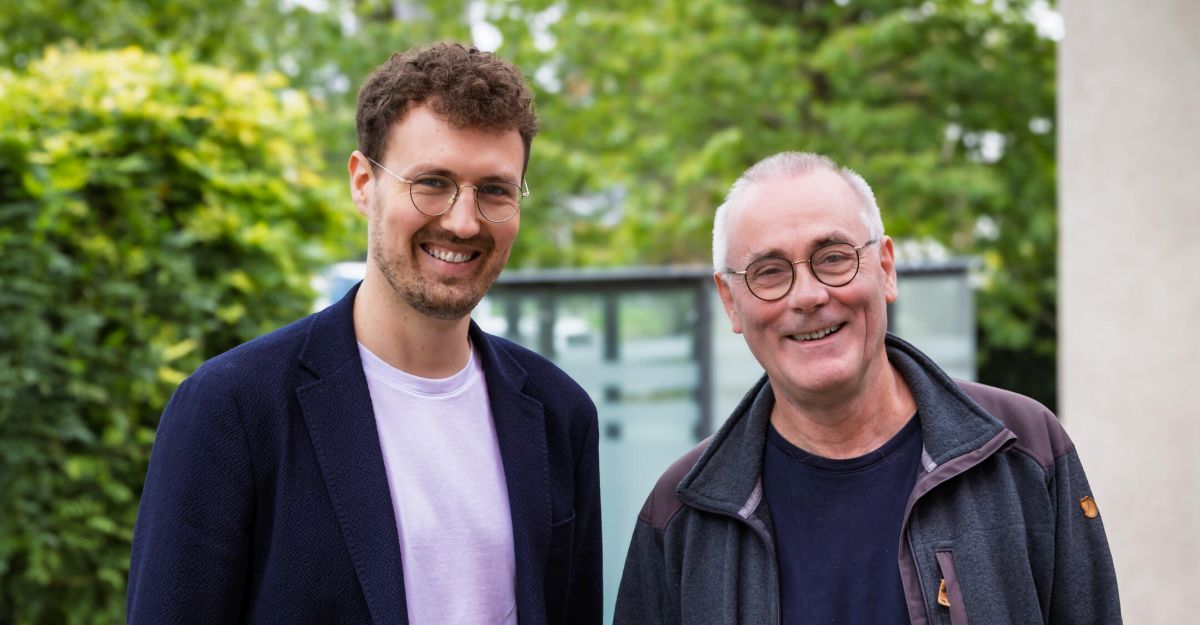
Dr. Klaas Yperman first learned about Professor Gary Lewin’s research on neuropathic pain while he was having a casual dinner with a good friend and his wife Alice Rossi. At the time, Rossi was working as a post-doc in Lewin’s lab – the Molecular Physiology of Somatic Sensation. She was part of a team studying potential drug compounds to treat neuropathic pain. Yperman found the research fascinating.
At the time, he was a post-doc in neuroscience at FMP. But in 2023, Yperman joined the Max Delbrück Center as an Innovation Manager. The Innovation & Entrepreneurship department evaluates the center’s research for its commercial potential – no small undertaking considering our more than 80 research groups, he says. But Yperman wanted to focus on Lewin’s research. He not only found it interesting, the project was also very advanced, he says. “I looked at the market and understood the need for new therapies for neuropathic pain.” Then quite literally, he took the idea skiing.
“I was about to go on a ski holiday when I saw that Helmholtz was offering an Enterprise Grant for spin-offs,” he recalls, laughing. “I thought,this is exactly what this project needs –someone who works exclusively on the business side.”
So, along with his skis, he packed his laptop. “Every evening on my ski holiday, I wrote that grant,” Yperman says. “I even submitted it from 3,000 meters up. I didn’t want to wait!”
His dedication paid off. The grant came through, and with it, a new path: Yperman became our first Entrepreneur-in-Residence, tasked with creating a roadmap to turn Lewin’s research on compounds to treat neuropathic pain into a viable startup named Allothera.
How did you go from Innovation Manager to Entrepreneur in Residence?
When I joined the Max Delbrück Center, Lewin’s group had one of the most advanced projects – a strong scientific foundation combined with a real therapeutic need in neuropathic pain — but there was nobody working full time on its translation.
When I saw the Helmholtz Spin-Off Enterprise Grant, I realized that this could fund someone to focus 100% on the business side. Initially, the plan wasn’t for me to take that role. But the Helmholtz jury told me that I should undertake it, or find someone within two weeks, otherwise they would not approve the grant. With such a short time frame, I didn’t have much of a choice. I took it on.
Which project from the Lewin lab are you working on?
The lab has developed small molecules that target Stomatin-like protein 3 (STOML3) – a protein involved in touch sensation. It’s early days, but the preclinical data is promising.
What does being an Entrepreneur in Residence mean in practice?
It means I’m working full time on building a startup. I’m writing grants, creating the roadmap, planning milestones, and figuring out where to get funding — whether through grants or venture capital or business angels. It’s about translating the science into strategy: understanding the market, knowing what type of formulation pharma companies are interested in – a pill, a cream, injection, etc. – and building relationships with investors and clinicians. We’re not just developing drugs — we’re building the case for why the world needs them and who will buy them.
You also won a spot in the Creative Destruction Lab (CDL) program. What has that experience been like?
Incredible – and intense. CDL is a mentoring program that brings together venture capitalists, pharma strategists, and experienced entrepreneurs. You pitch your project, set clear objectives, and receive brutally honest feedback. It’s harsh. They don’t sugarcoat anything. You hear things like, ‘You don’t have a business model. And ‘why would anyone want to fund this.’ But that’s exactly what you need – honesty from people who know what they’re talking about. Out of 20 people who went through the process last year, only seven were left, which shows how stringent the process is. I am now working with two mentors who are helping me devise a roadmap for our start-up Allothera. We will do our utter best to graduate from CDL this year.
What makes turning academic science into a startup so challenging?
Many scientists love doing science — and that’s great. But if you want to bring your discovery to life, you have to step out of the lab. You need to think about the market, regulatory aspects, intellectual property, and funding. You also need to know who will pay for the further development of your product, how clinicians will use it, and how to make investors believe in it.
How did your background prepare you for this transition?
I completed my PhD in plant biotechnology at VIB in Belgium, and then I worked as a postdoc in neurobiology at the FMP in Berlin. But I realized pure basic research wasn’t for me – it was too solitary. My wife was a life science consultant at the time, and she taught me how to think like one — how to do market analysis, identify competition, and assess value. That’s when I realized that scientists can easily learn the business side – it just takes curiosity and a willingness to learn.
What are you focusing on at the moment?
Right now, my main focus is on building a roadmap and develop strategic connections — with venture capitalists, clinicians, and potential partners. I reach out to people, present where we are scientifically combined with the vision for the company listen to their feedback, and then circle back a few months later with new data and ideas. It’s about building trust and credibility. I am also exploring new grant opportunities and strategic collaborations.
These are so called “soft skills.” Why are they so essential in your work?
Because you can have the best technology in the world, but if you can’t communicate it, inspire others, or build trust with your team and investors, you’re not going to be able to move it forward.
Source: Max Delbrück Center
From bench to business

